
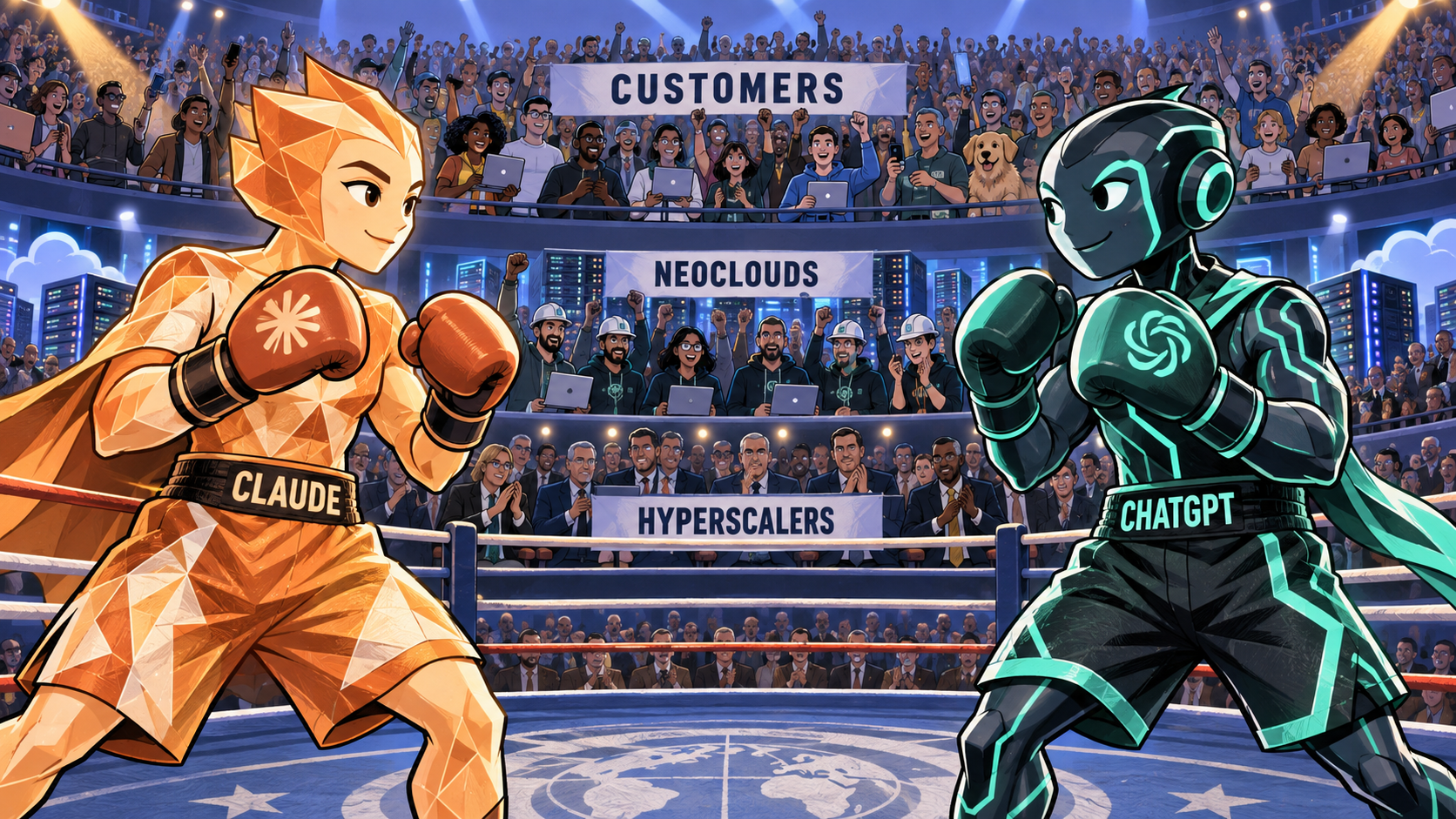
The frontier AI market is entering its next phase. The industry is moving beyond consumer chatbots, with enterprises now starting to adopt long-running coding and work agents more deeply – all of which drive token-intensive workflows. That shift is dramatically increasing revenue and compute consumption, forcing leading AI labs like Anthropic and OpenAI to secure tens of gigawatts of future capacity.
Anthropic has captured the early lead in this agentic transition. Its enterprise-first strategy, usage-based pricing, and earlier push into agentic services have driven its exponential acceleration this year, allowing it to overtake OpenAI in quarterly revenue. OpenAI is now responding with its own enterprise platform, and has shifted its pricing structure deeper into metered APIs. Both now have rapidly expanding roadmaps to drastically increase AI capacity over the next several years, and are relying upon multiple clouds, neoclouds, chip providers, and buildout partners to get there.
This series provides a first look at Anthropic and OpenAI ahead of their coming IPOs. This post examines the rise of agentic services, the resulting revenue inflection, and the differing product and pricing strategies behind both companies. Follow-up posts [in Premium] will cover each AI lab's capacity buildouts and financing strategies.
Note that the financial comparison below was from press reports (leaked details). We got way more detail on Anthropic's quarterly results once it published an up-to-date S-1. I added several updates to the original piece in purple. OpenAI and Anthropic also announced new OpenClaw-like services (dots and Duet) since I wrote this piece.
I covered Anthropic extensively this week in Premium as it IPO'd, including a detailed two-part look at its financials, corporate profile, GTM efforts, and product lines. From here, I will be taking an extensive walk through the buildout and chip deals made by both Anthropic and OpenAI. That buildout series will be of interest to hyperscale clouds, chip providers (including NVIDIA, AMD, Cerebras, and Broadcom), neocloud & site partners (including CoreWeave, IREN, Nscale, Lambda, SB Energy, Hut 8, Core Scientific, TeraWulf, Cipher Mining, and Riot), and upstream suppliers.
Join Premium for insights like this every week across AI & ML, Data & Analytics, Next-Gen Security, DevOps, SaaS platforms, and the hyperscalers. I'll be heavily covering Anthropic from here, and, once it debuts on the public market, OpenAI. I've also been covering Cloudflare, Rubrik, NVIDIA, Axon, Reddit, and AppLovin lately, and will soon take an initial look at DigitalOcean.
- Agentic AI is now a top driver of compute demand. These coding agents, work agents, and managed long-running agents consume far more tokens than chatbot usage.
- Anthropic entered the agentic market earlier, and built its operational model around usage-based enterprise revenue. That helped it reach a reported $65B revenue run rate in July, versus $40B for OpenAI. An estimated 75-85% of ARR comes from consumption-based pricing vs 15-25% from subscriptions.
- Anthropic has now spread its Claude models across the agentic AI platforms of all 3 top clouds, plus has embedded its full platform into AWS and now Google. These cloud partners are helping Anthropic capture enterprise customers that want to utilize cloud spend commitments.
- OpenAI has shifted its focus to enterprise over the past year, and has now assembled a set of competing agentic products (despite the headwinds from its major org restructuring, unwinding its exclusivity with Microsoft, and ongoing mgmt churn). OpenAI has been roughly 3-5 months behind Anthropic in releasing competing agentic products.
- Critically, OpenAI has also been expanding more deeply into consumption-based pricing. This started in April with a new PAYG Enterprise plan, and its metered API is now backing several new agentic products, including a new managed agent service in AWS Bedrock.
- The gap between these competitors is beginning to close, as coding and agentic workloads have quickly risen in OpenAI's mix this year. Its consumer segment is expected to fall from 65% to 20% of the mix this year, and mgmt noted that its enterprise segment just surpassed consumer in July.
- Metered pricing should drastically improve the economics of both companies in this agentic demand wave. Revenue can expand with every additional workflow and token rather than adding seats. Anthropic is already hitting non-GAAP profitability, and OpenAI's shifts into consumption-based pricing should help reverse its worsening margins.
Compute requirements are rising alongside revenue. SemiAnalysis estimates that OpenAI and Anthropic currently have over 6GW of compute, with combined demand expected to exceed 100GW by the end of 2030. Coming soon [in Premium] are deep dives into Anthropic's and OpenAI's ongoing buildouts and financing strategies.
Sections:
- Frontier AI labs
- The rise of agentic services
- Agentic demand wave
- Different product strategies
- IPOs delayed
Frontier AI labs
Frontier AI models continue to advance rapidly. The leading frontier model benchmarking site, Artificial Analysis, shows the frontier capabilities continuing to advance, with models repeatedly overtaking one another as they scale. Across 2026, models have improved at reasoning and long-running agentic tasks such as coding, tool use, and multi-step orchestration.
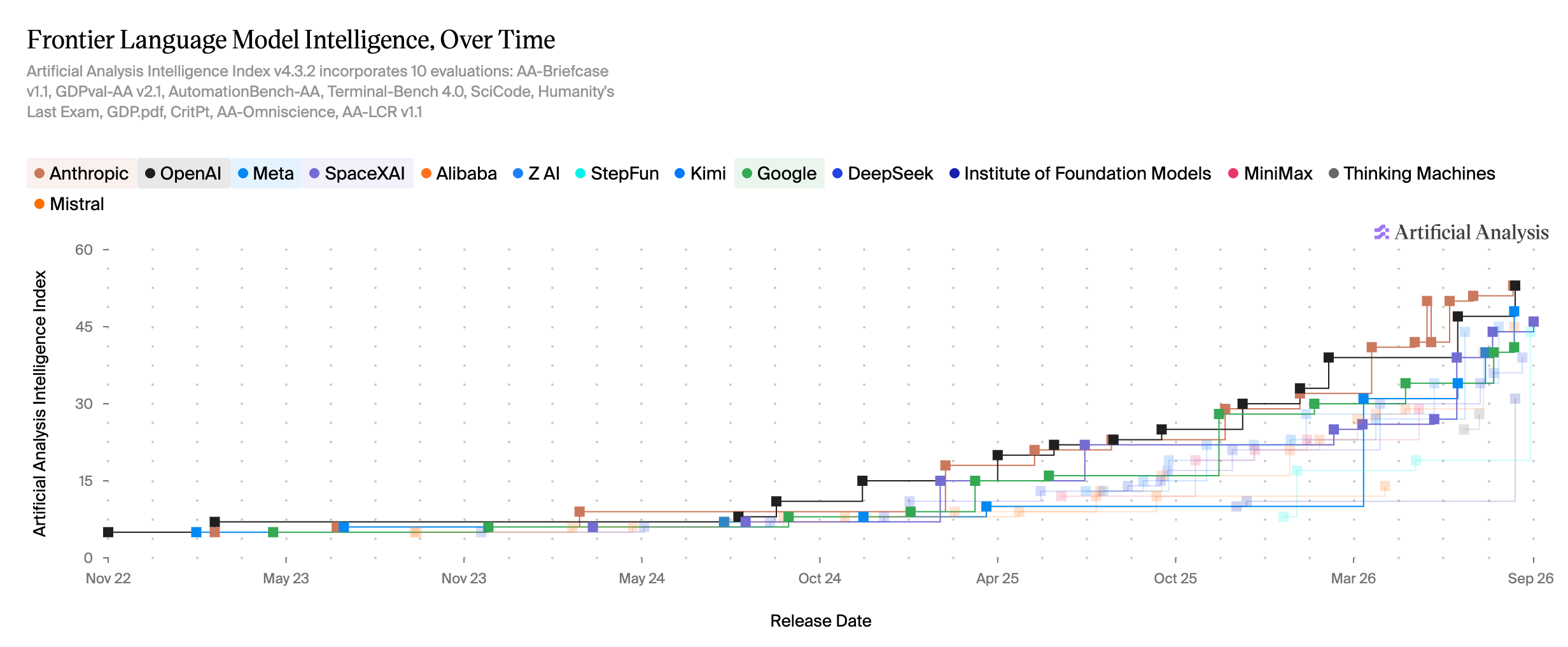
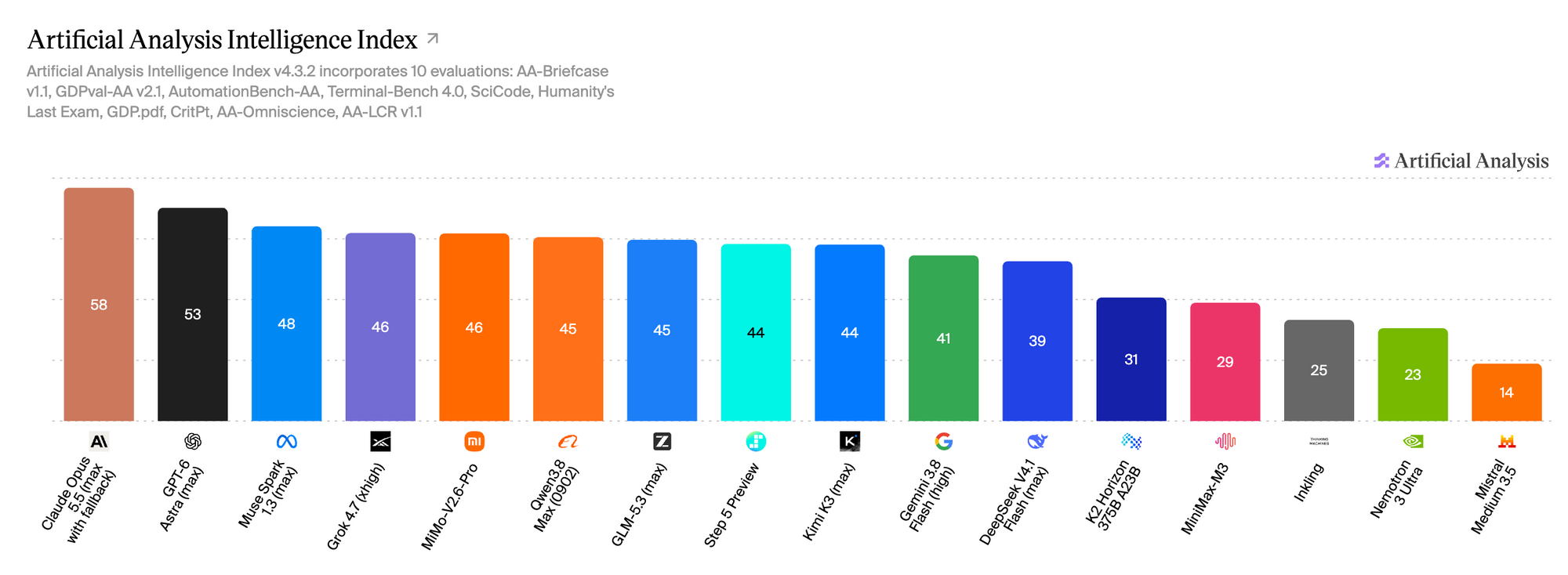
As of late September, the latest Anthropic (Claude Fable) and OpenAI (GPT-6 Astra) models lead, followed by Meta (Spark), SpaceXAI (Grok), and Google (Gemini). Open-source models from China are also heavily in the mix, including Alibaba (Qwen), Xiaomi (MiMo), Z.ai (GLM), Moonshot (Kimi), StepFun (Step 5), DeepSeek, and MiniMax.
Leading AI labs and hyperscalers are creating new enterprise agentic capabilities and services powered by these frontier models, allowing enterprises to create and oversee long-running agents that perform work.
The rise of agentic services
Until now, Anthropic and OpenAI have had vastly different market approaches. OpenAI's ChatGPT business has been primarily consumer-driven over the last few years, in contrast to Anthropic's enterprise-heavy model. But over the past year, OpenAI has expanded deeper into enterprise features and pay-as-you-go metered APIs to better match Anthropic's operational stance.
Anthropic and OpenAI now offer competing agentic coding and enterprise work solutions, along with a managed-agent service driven by metered APIs. OpenAI is also going beyond Anthropic's offerings with its enterprise agent (Frontier) and customer service agent (Presence) platforms.
| Enterprise Tool | Anthropic | OpenAI |
|---|---|---|
| Agentic coding | Claude Code | OpenAI Codex |
| Agentic work | Claude Cowork | ChatGPT Work |
| Managed long-running agents | Claude Managed Agents | Agents API |
| Enterprise agent mgmt platform | - | OpenAI Frontier |
| CustSupport agent mgmt platform | - | OpenAI Presence |
OpenAI has lagged Anthropic by up to 5 months in rolling out its core enterprise agentic capabilities. This earlier rollout helps explain Anthropic’s head start in capturing agentic demand.
| Tool Release | Anthropic | OpenAI | Gap |
|---|---|---|---|
| Agentic coding in GA | May-25 | Oct-25 | 5 months |
| Agentic work in GA | Apr-26 | Jul-26 | 3 months |
| Managed agents in beta | Apr-26 | Sep-26 | 5 months |
Now that OpenAI has brought its enterprise agentic capabilities up to par and backed them with a metered API, I believe the executional gap is narrowing. And OpenAI is also pursuing other enterprise services beyond what Anthropic provides.
Beyond the above services, each of major AI labs is also now providing an OpenClaw-like managed service that provides a long-running 24/7 personal assistant. This will further spin the consumption meters.
- Google debuted a personal AI agent, Gemini Spark, at its I/O conference in May, and rolled it out to all Ultra and Pro users in July. This is deeply integrated with its Google Workspace productivity suite.
- SpaceXAI debuted its Grok Bot autonomous agent service in August, geared for the automation of business tasks.
- Meta debuted Muse in September, powered by its new closed-source Spark models. This is more consumer-oriented than the others.
- OpenAI hired the OpenClaw founder back in February to pursue personal agents, and finally debuted a new autonomous agents within ChatGPT called dots. (This is built atop its Agents API and sandboxes).
- Anthropic recently released its own OpenClaw-like managed agent in early preview within Claude in October called Duet that is geared for business professions and SMB owners. (This is built atop its Managed Agents, sandboxes, and Claude for SMB tool integrations.)
- New startups like Instinct and Lindy are emerging in this space.
Agentic demand wave
The top two frontier AI labs, OpenAI and Anthropic, are both signaling pending IPOs. While both remain in extreme hypergrowth, Anthropic has been running laps around OpenAI in 2026.
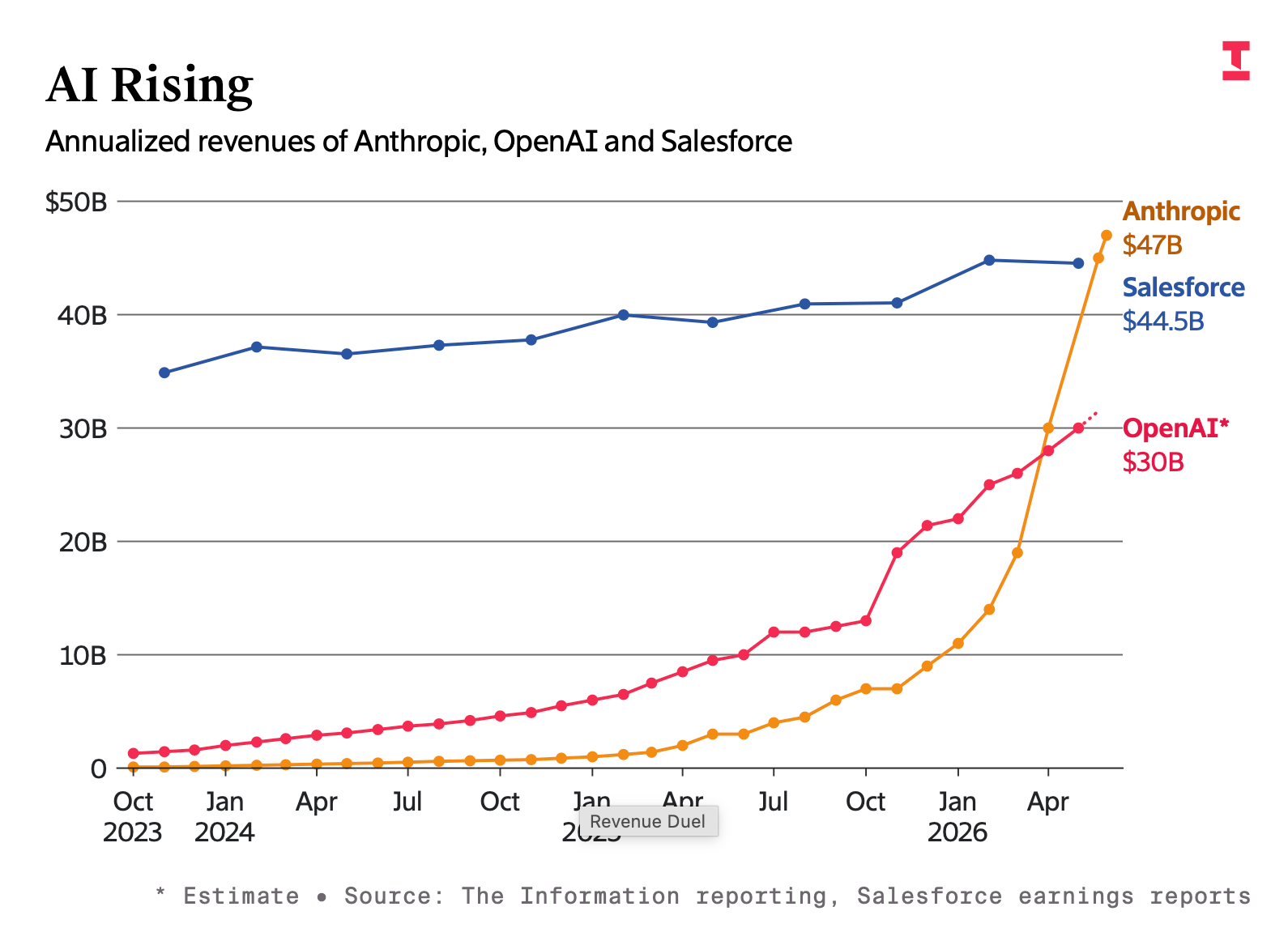
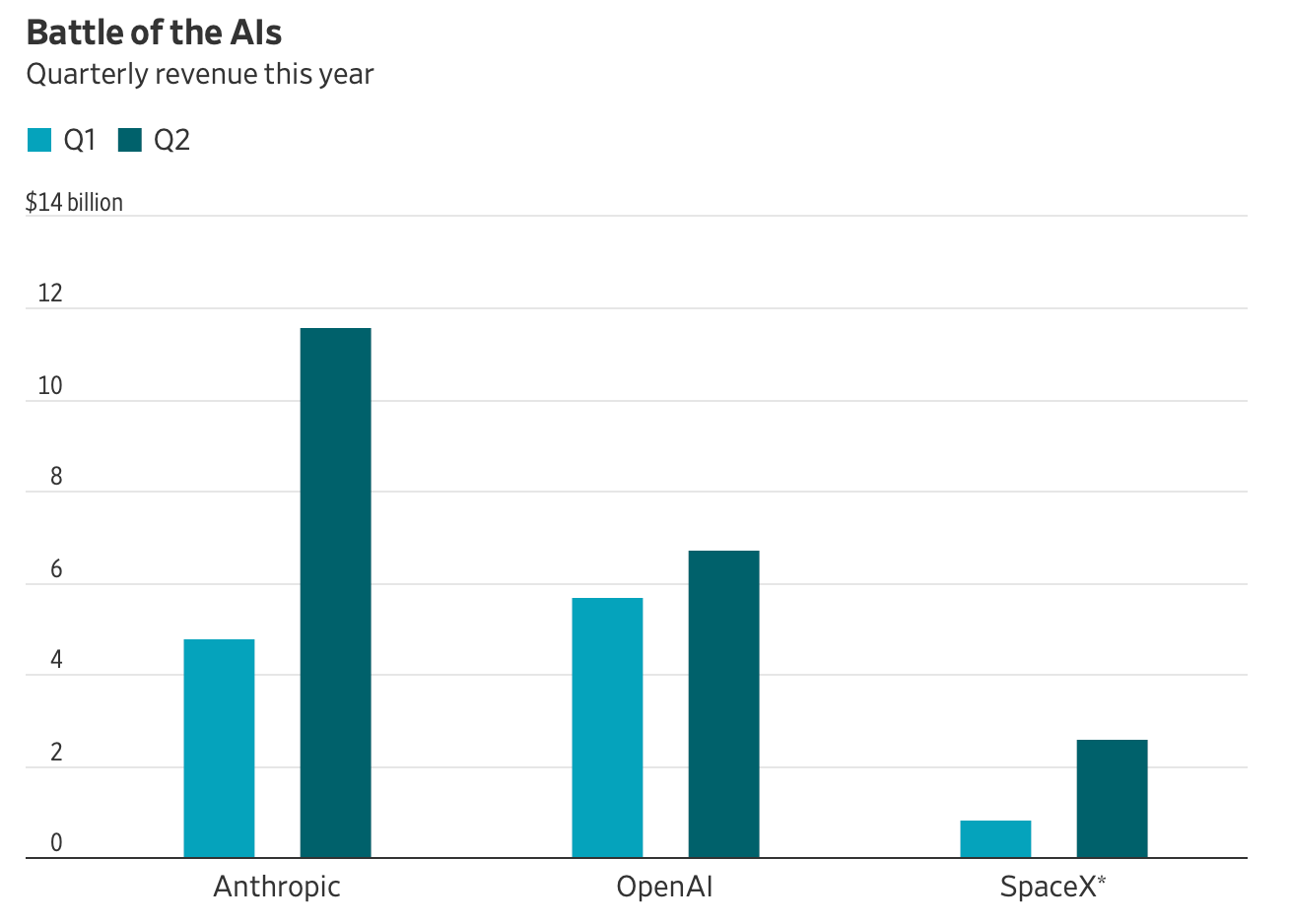
Anthropic just overtook OpenAI in Q2 2026 after growing revenue +142% sequentially.
| Metric | OpenAI | Anthropic |
|---|---|---|
| 2025 Exit Runrate | $20B | $9B |
| Q1 2026 Rev | $5.7B | $4.7B |
| Q2 2026 Rev | $6.7B | $11.6B |
| ... seq growth | +18% | +144% |
| ... YoY growth | 14x | |
| Current Runrate | $40B | $65B |
| ... YTD growth | 2x | 7x |
| ... YoY growth | 3x | 13x |
| Op margin | worsen to -184% | swung pos in Non-GAAP |
| Latest Valuation | $852B | $965B |
- In its Series H in May, Anthropic revealed it hit a $47B run rate that month, growing 5x from the start of the year. At its developer conference that month (Code with Claude), mgmt noted that API volume had grown 18x YoY. It then grew revenue +144% sequentially in Q2 as enterprise use of AI and coding agents exploded further.
- Meanwhile, OpenAI seemed to stumble a bit. After growing revenue +250% in 2025, they slowed in 2026. They reported +18% seq growth in Q2 (~94% annualized) as they hit a $40B run rate.
While OpenAI has tripled its run rate over the past year, Anthropic has grown its run rate thirteenfold. Anthropic has clearly been riding a huge acceleration wave over 2026 driven by metered API use from Claude Code, Claude Cowork, and Claude Managed Agents – all of which OpenAI was slower to catch up to. (And OpenAI hasn't been helped by its continued mgmt churn.)
But OpenAI looks to be turning things around now that it has released competing agentic services and more fully adopted consumption-based pricing.
- Mgmt commentary since suggests that OpenAI has been reaccelerating in Q3. Mgmt noted that its run rate grew 20% in July, more than their recent +18% seq revenue growth for all of Q2. Its business segment grew even faster at +32%.
- In August, the CFO noted that enterprise was now larger than consumer – which was previously expected by the end of the year. Their new ads business is now hitting $1B ARR, and was just hooked into Shopify and HubSpot tools.
In a CNBC interview in August, OpenAI's President noted having 1B ChatGPT users and 2M enterprise customers. As a sign of this rising agentic demand, OpenAI noted that Codex workloads accounted for 64% of token output from enterprise customers, while chat workloads fell to 36% – which has flipped from where it was in late March.
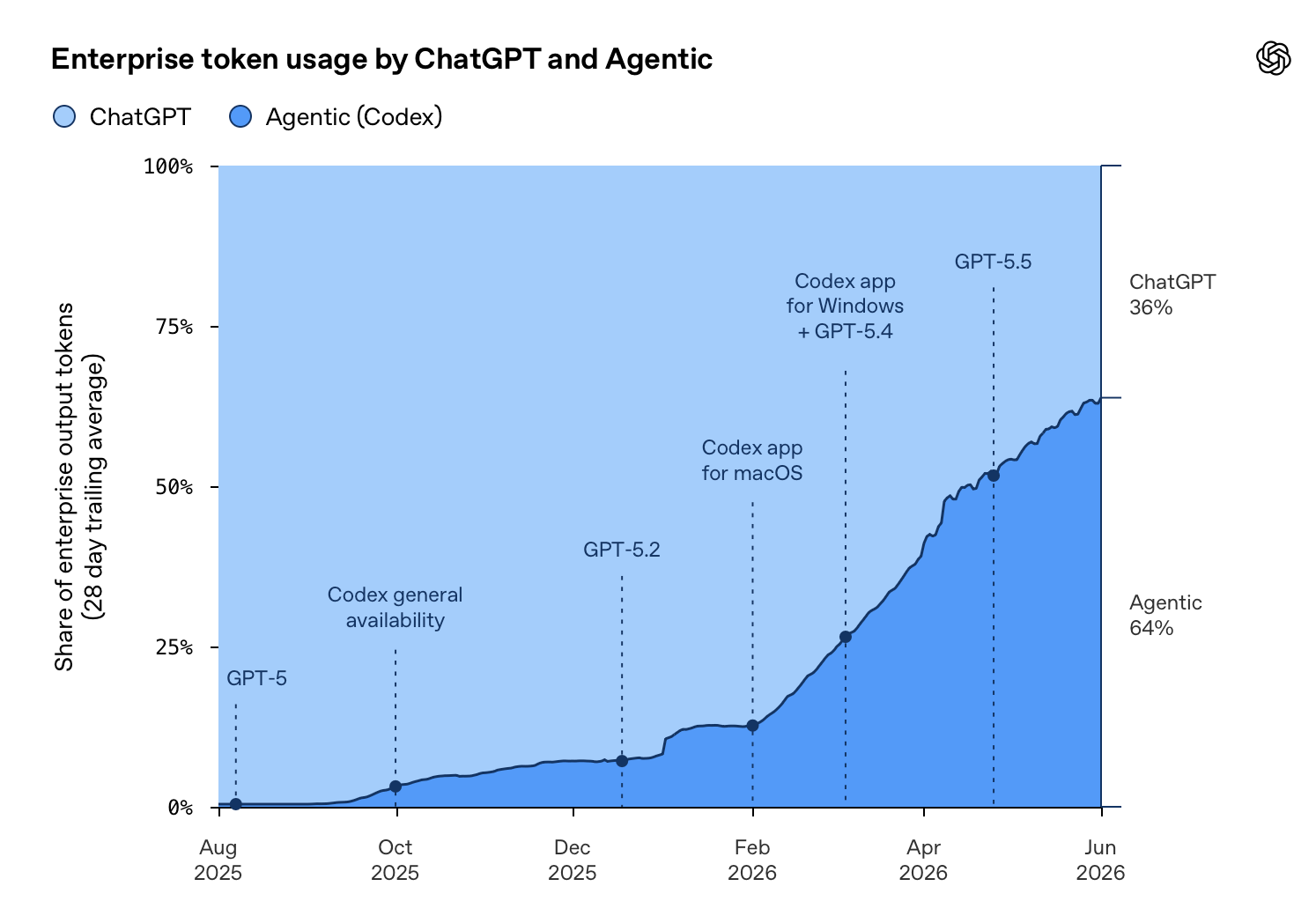
They also confirmed that Codex use is spreading into other agentic use cases across the enterprise – the areas that its new ChatGPT Work and Agents API now focus on.
"Since February, weekly active enterprise Codex users grew 108× in legal, 41× in sales, 41× in recruiting, and 26× in marketing, compared with 5× in engineering."
SemiAnalysis has been modeling both Anthropic's and OpenAI's financial profiles. Here are a few key takeaways, sprinkled with my thoughts.
- They confirm that Anthropic's demand explosion this year has been driven by its success in agentic coding (Claude Code) paired with its usage-based API revenue. They estimate this accounts for 75-85% of revenue, compared to 15-25% from subscriptions.
SemiAnalysis: "This is the stark difference we want to show. OpenAI went after consumer while Anthropic has been strong in the enterprise. While OpenAI has new business lines like Ads in consumer, we believe this is not a material short term to total industry ARR. The opportunity is in B2B, and specifically, in usage-based pricing models. Today, Anthropic is ~75-85% consumption-based API spend which has put Net New ARR in the $10B+/month range as the year has progressed. Fable is the next accelerant of NNARR with higher pricing and a whole host of new workloads and volume expansion being unlocked with the latest model release."
- Deeper agentic adoption is driving a massive increase in metered token use. Anthropic clearly has a better profitability profile due to this, and customer usage has been skyrocketing. Anthropic's CFO shared on a podcast in May that their NRR was 500%!
SemiAnalysis: "Claude Code’s success has levered Anthropic to the right tailwinds and business model. ... Margins on the API business are vastly superior to consumer subscriptions. By focusing on API revenue, there is no ceiling on how much revenue can be generated from a single user because it’s billed by token rather than by seat. As the same user/customer adopts more agentic workflows, they consume more tokens and generate more revenue without Anthropic needing to add another customer."
- They estimate Anthropic's token-as-a-service revenue (indirect access via an external cloud partner) has risen from 5-10% to 15-20% of ARR over the last quarter, as Anthropic spreads model availability deeper into CSP services. They believe enterprises prefer this usage model to avoid AI model lock-in, maintain flexibility, and utilize cloud commitments. Recent moves here include making Claude models available on Microsoft Foundry and bringing the full Claude Platform to AWS.
Across both of those methods, Anthropic's S-1 noted it derives 48% of revenue through cloud marketplaces.
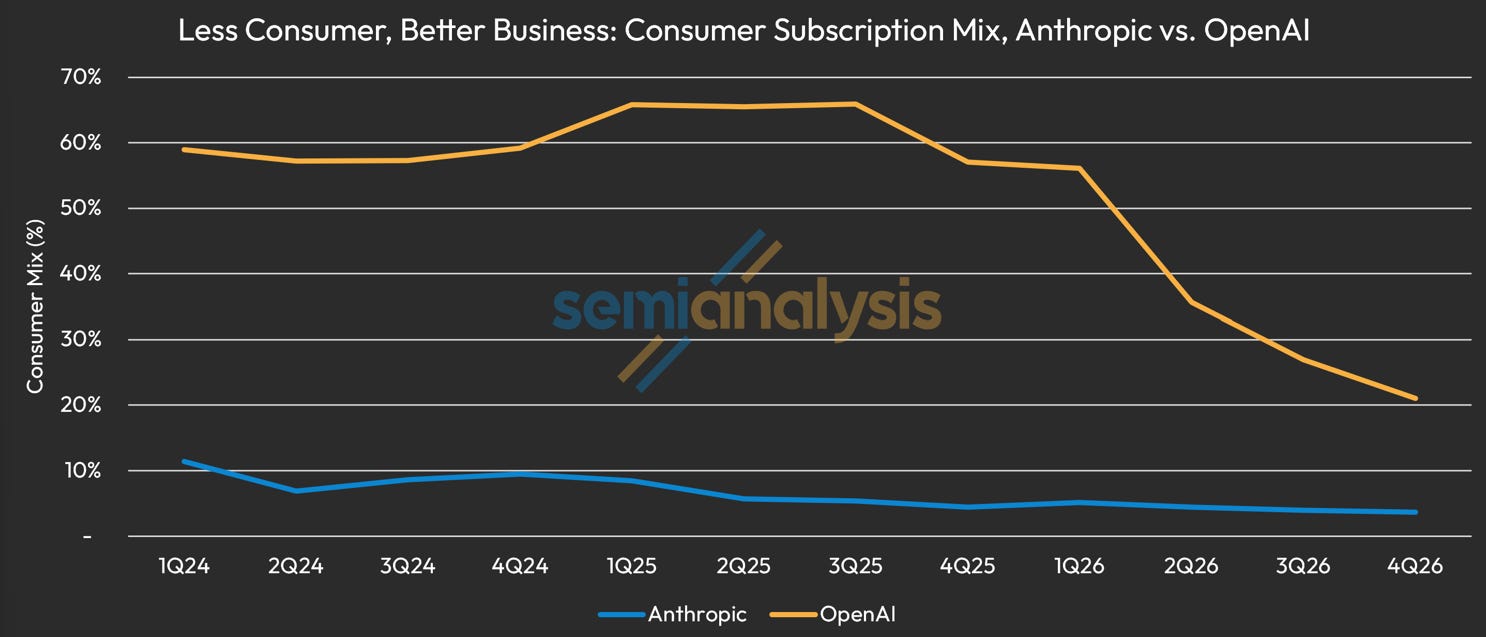
- As a sign of Anthropic's enterprise-first approach, they estimate its consumer segment is a mere 5% of ARR.
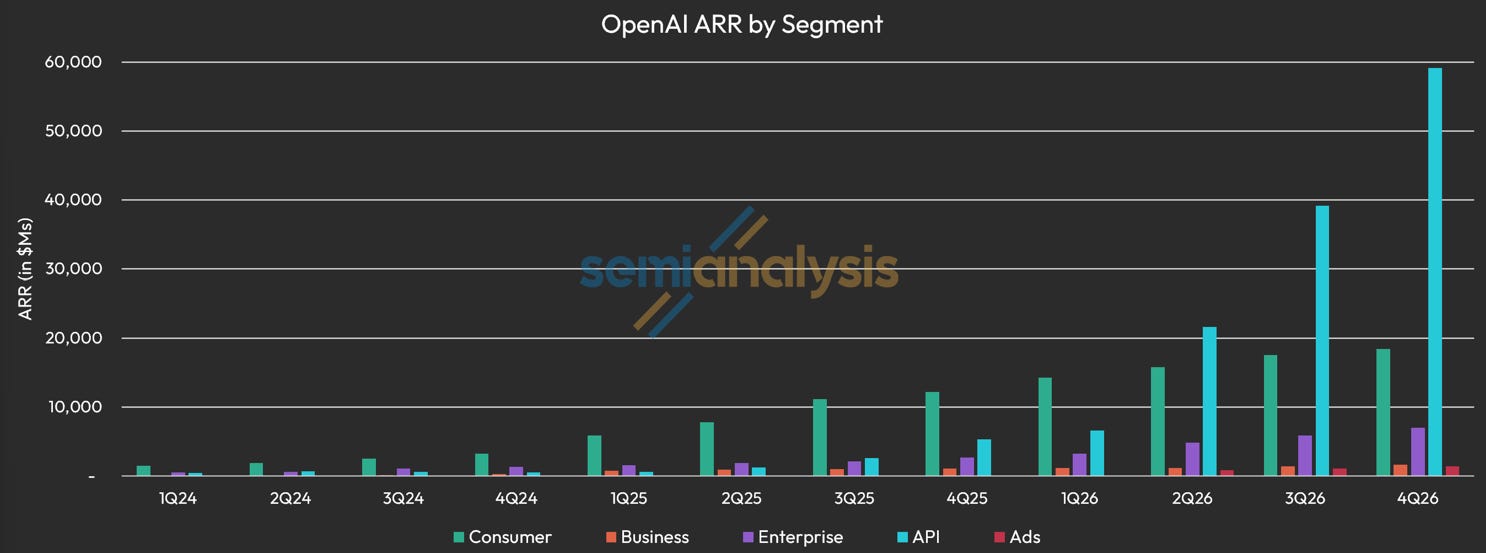
- OpenAI's heavy focus on consumers and free tiers has given it a wildly different profitability profile, as it has to subsidize more usage. This is starting to improve after adding ads to the free and lowest-paid tiers, but they estimate it will have a minimal impact over the near term. More important is its recent shift into usage-based pricing.
- As it moves into coding and work agents, OpenAI's customer profile is now shifting more heavily into enterprise. SemiAnalysis estimates its consumer mix was over 65% in Q1, but fell to 40% in Q2 and will drop to 20% by year-end.
- OpenAI's stance is now improving. They estimate that its shift into a similar metered pricing model has driven a reacceleration this quarter, and it should drastically improve its margin profile.
- They estimate that Codex and agentic workloads have quickly risen to 2/3rds of inference as of June (very similar to OpenAI's later report of 64% of enterprise usage being from agentic coding) and that the underlying metered API will now drive a massive acceleration across 2H 2026. They project OpenAI's run rate will rise from $40B to ~$87B by year-end.
- They peg the top 2 labs at 6GW of capacity now, and expect compute demand to grow to over 100GW by the end of 2030.
SemiAnalysis: "In fact, we see over 100GW of compute demand between OpenAI and Anthropic by the end of 2030. This will require over 90GW of net compute additions through 2030 vs 2.5GW added in 2025 and 5GW in 2026. Today, we estimate OpenAI and Anthropic have access to just over 6GW of compute."
This implies a long runway of demand that these labs won't be able to fill. This would require these labs to double their AI capacity every year through 2030, an extremely difficult task in later years! As I cover in depth in coming posts detailing their buildout efforts, we have visibility into future commitments that will grow Anthropic to over 16GW of capacity by 2030, and OpenAI has a roadmap to add 30GW. They have a long way to go to fill this growing demand wave.
Differing product strategies
Let's walk through the various pricing mechanics and enterprise services that have emerged from both companies.
Anthropic's strategy
Anthropic’s strategy with Claude has centered on turning it into a tool for getting enterprise work done. It has expanded from coding into broader work automation, then into managed services that let enterprises build and oversee their own long-running agents. Metered consumption allows revenue to grow as enterprises give these agents more work, extending its opportunity well beyond subscription seats. Alongside those core services, it is adding integrations, vertical-specific releases, and partners that help embed Claude more deeply into enterprise workflows.
Given its head start with enterprise agentic services driven by a metered API, Anthropic has been seeing an accelerating demand inflection throughout 2026, driven by agentic coding and enterprise work automation.
Pricing
- In consumer and self-service SMB business plans (Team plan for up to 150 employees), users access Claude via tiered subscriptions, with metered API prices kicking in after tier limits are reached.
- Enterprise plans have a $20 per-seat monthly charge, and all consumption is metered. For self-service Enterprise plans, this is handled via a prepaid credit-based system. In higher-end "sales-assisted" Enterprise plans, all consumption is pay-as-you-go (PAYG) billed at API rates.
- API access is pay-as-you-go metered, priced per model utilized and service tier (Standard, Batch, Fast).
- Metered pricing changes when using Claude models within 3rd-party AI cloud platforms (AWS Bedrock, Google Agent Platform, and Microsoft Foundry) or the full Claude platform now within AWS and Google Cloud. Older partnerships with AWS Bedrock and Google have their own PAYG metered pricing for Claude models, while the newer Claude on AWS and Microsoft Foundry utilize a credit-based system based on "Claude Consumption Units" (CCUs).
- Additional fees apply for data residency and tool use (web search, code execution, browser use, and computer use).
Core agentic services
Anthropic's current demand wave is driven by its core agentic services: agentic coding (Claude Code), agentic work (Claude Cowork), and a fully managed control layer for enterprise agents (Claude Managed Agents).
- Claude Code is an agentic developer tool that provides an active coding partner that runs within a project directory, IDE, or desktop app. Developers can create autonomous AI agents that can interact directly with code, data files, developer tools (IDEs, source repos, issue trackers, build pipelines), communication channels (Slack, Telegram, Discord), and the terminal. This went GA in May-25 as part of its Claude 4 release.
They soon pivoted Claude Code's agentic capabilities into an Agent SDK for developers to build any type of agentic workflow, then gave those agents composable skills and browser use via a Chrome plugin. In January, this became the research preview of Claude Cowork, the first product to emerge from their new product incubation lab.
- They pivoted Claude Code towards other forms of enterprise work with Claude Cowork, which can be accessed via desktop, mobile, or web app. Users can create autonomous long-running agents that can automate tasks, connect to tools (via Connectors), read and write data, and use a browser to search or interact with websites & apps. The desktop app can interact with the local system and files, and use the terminal. This went GA in April.
- Claude Managed Agents provides a suite of APIs to build and manage long-running AI agents. These agents are fully managed by Anthropic, and can utilize 1st- or 3rd-party serverless infrastructure (sandboxes). Anthropic provides a managed harness that oversees each agent's session state, sandbox use, orchestration, tool calls, and data access needs. This debuted in April in beta.
Anthropic also works closely with Cloudflare to provide secure private networking (tunnels) to MCP servers.
Their highest-end enterprise plans are fully PAYG across all of these services. For all other plans, Claude Code and Cowork services are available in the $20 Pro subscription tier, with higher tiers increasing usage limits. Once usage limits are hit, business plans switch into metered pricing via prepaid credits from a shared credit pool. Claude Managed Agents, released in beta in April, is built on its metered API plus has session runtime fees to cover sandbox (container) use.
Other enterprise capabilities
Beyond those key new services, Anthropic has made other enterprise moves over the past year.
- They have been tailoring Claude to specific verticals across Financial Services, Life Sciences, Healthcare, Small Business, Science, and Teachers.
- They integrated Claude into MS365 productivity tools, then expanded Financial Services with an Excel integration and more data providers.
- Anthropic added a new partner network to promote enterprise adoption of Claude.
- As they debuted a new Mythos class of models for cybersecurity, they announced a new Project Glasswing program to grant access to front-line defenders.
- Beyond making their models available across all 3 top clouds, they now provide the full Claude platform on AWS. They announced this in their major partnership expansion with Amazon in April, and it went GA in May.
Per the AWS product page: "Claude Platform on AWS gives you access to Anthropic's first-party platform — operated by Anthropic — but accessed through familiar AWS entry points: your existing IAM credentials, consolidated AWS billing, and CloudTrail audit logging. Customer data is processed by Anthropic outside the AWS boundary."
- They are extending Claude agents into an always-on work agent within team collaboration tools via Claude Tag.
- They have also recently introduced new enterprise safeguards that use customer-provided data stores within all top 3 clouds, developed in partnership with large enterprise customers in heavily regulated industries.
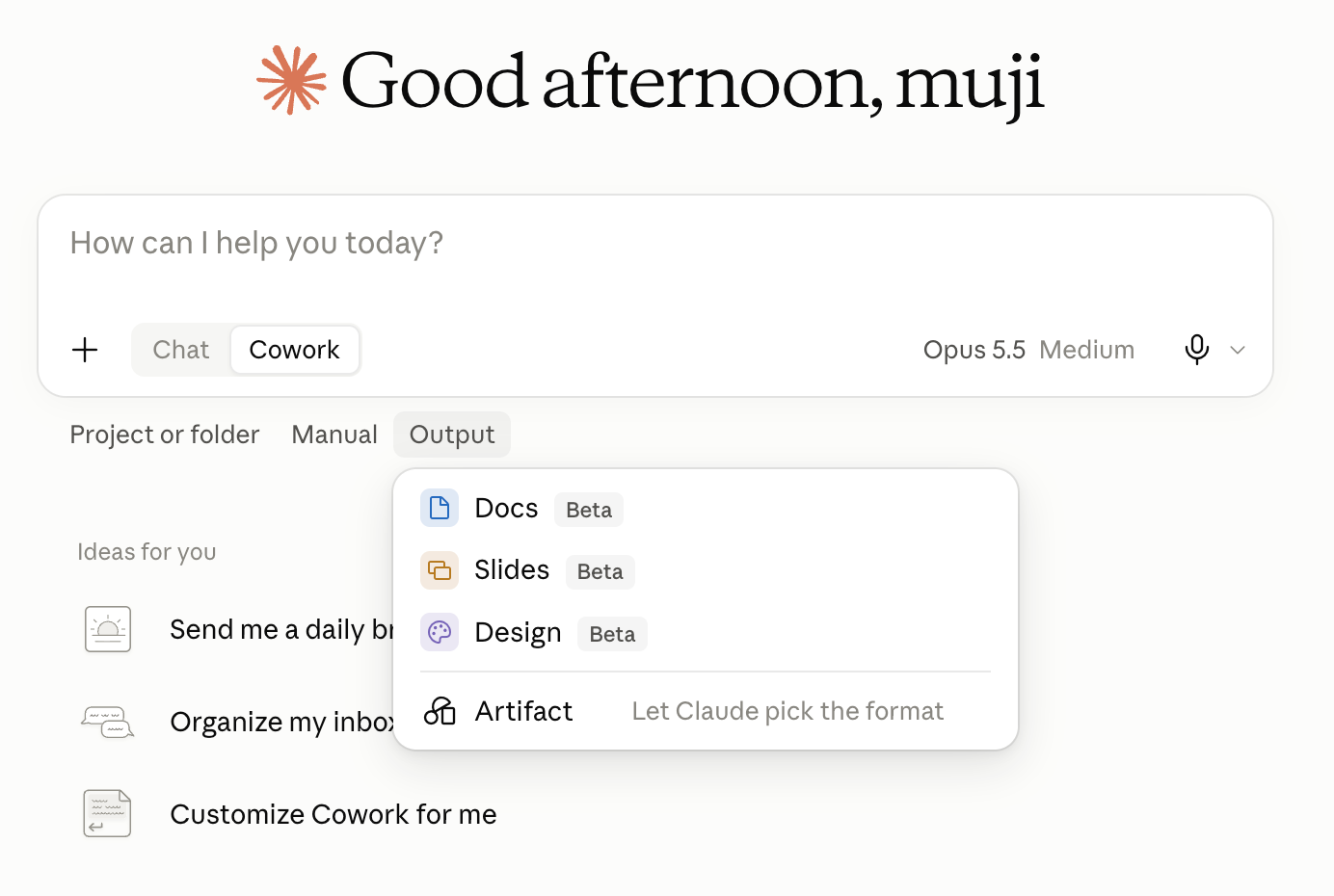
- As of September, these agentic capabilities are now being integrated into a unified Claude superapp geared for enterprise use by combining the chatbot and Claude Cowork. This app also embeds its Design agent for website & app design (competing with Figma), and they have added the ability for agents to directly generate Docs and Slides (competing with productivity suites like MS365 and Google Workspace).
OpenAI's strategy
OpenAI is approaching the same enterprise opportunity from its massive consumer foothold. Its enterprise strategy is to turn ChatGPT into a broader platform for coding, work automation, and enterprise agents, while bringing those capabilities together in a unified app. Unlike Anthropic, it is also expanding into enterprise agentic mgmt platforms that can oversee internal agents (Frontier) and customer support agents (Presence).
Alongside this product expansion, OpenAI is shifting enterprise usage more toward metered consumption, giving it a more direct way to monetize the intensive agentic workflows it is now starting to attract. Their major shift in April (to a token-based Enterprise plan and stand-alone Codex accounts) pulled them closer to Anthropic's billing model.
Pricing
- ChatGPT is accessed via tiered subscriptions, with metered consumption kicking in after tier limits are reached. In self-service business plans, this metered usage pulls from a shared pool of prepaid credit.
- Their (now former) CRO announced a major push into enterprise in April, which introduced a new pay-as-you-go token-based Enterprise plan. Like Anthropic's higher-end plan, this has a per-seat monthly charge, and all consumption is billed pay-as-you-go via metered API. They also introduced standalone Codex seats with metered pricing.
- API access is pay-as-you-go metered, priced per model utilized and service tier (Standard, Batch, Flex, Fast). Beyond frontier LLMs, OpenAI also provides specialized multimodal models for audio generation, video generation, image generation, and transcription.
- Additional fees apply for voice sessions and tool use (web search, file storage, and containers for code execution & shell access).
Core agentic services
OpenAI now has multiple agentic services that should drive enterprise demand from here in a similar fashion: agentic coding (Codex), agentic work (ChatGPT Work), and a fully managed control layer for enterprise agents (Agents API).
- Codex is their agentic developer tool that provides an active coding partner. This debuted in research preview in May-25, and over the next few months they improved the model with GPT-5 and brought it up to par. It went GA in Oct-25.
By 2026, they started to pivot into other enterprise work needs. Per WSJ, the intent was to fold these capabilities into a new superapp, which the former CRO confirmed in April. They also folded in their new Atlas enterprise browser that debuted last October (which is no longer offered standalone).
- After starting to pivot Codex into other forms of enterprise work in June, they soon debuted ChatGPT Work, a new unified superapp across desktop, mobile, and web. Users can create autonomous long-running agents that can automate tasks, connect to tools (via Plugins), read and write data, and use a browser to search or interact with websites & apps. The desktop app can also interact with the local system and files, and use the terminal. It went GA in July.
- OpenAI just announced Agents API, a suite of APIs to build and manage long-running AI agents. These agents are fully managed by OpenAI, and can utilize 1st- or 3rd-party serverless infrastructure (sandboxes). This provides a managed harness that oversees each agent's session state, sandbox use, orchestration, tool calls, and data access needs. It debuted this month in open beta.
Codex and ChatGPT Work are available in the $20 Plus subscription tier, with higher plans increasing usage limits. Once those usage limits are hit, business plans switch to metered credit-based pricing from a shared credit pool. Their highest-end enterprise plan introduced in April is fully PAYG across all of these services, as are the PAYG Codex-only seats now available in Enterprise plans. The new Agents API, just released in beta, is built on its metered API, plus has additional fees for containers (sandboxes) and browser use.
Beyond matching Anthropic's capabilities, OpenAI has also created two agentic mgmt platforms to build and oversee any internally-facing enterprise agents (Frontier) and customer-facing support agents (Presence). These are both in limited release, and no pricing has been announced.
- OpenAI debuted a new enterprise agentic mgmt platform, OpenAI Frontier, that allows enterprises to build and manage 1st- and 3rd-party agents. This provides visibility, secure tool & data access, enterprise-wide policies and guardrails, and is built atop an underlying knowledge base built over connected enterprise apps. It has been in limited release since February.
- OpenAI also debuted a new enterprise platform, OpenAI Presence, for building and managing voice- and chat-based support agents. It has been in limited release since July.
Also, Frontier is an incredibly confusing product name, given how the tech industry already uses 'frontier' to describe bleeding-edge AI models.
Other enterprise capabilities
OpenAI has been heavily improving its enterprise capabilities and products over the past year. Beyond those services above:
- A year ago, they started to uplevel the enterprise features within ChatGPT, including shared projects and integrations into collaboration tools and productivity tools.
- They soon announced integrations with external enterprise Apps and an enterprise knowledge layer over the data within those apps, then built an app directory & ecosystem around it all. This knowledge layer provided a major foundation for their Frontier service that appeared a few months later.
- During their funding round in February, they announced a major partnership with AWS. This expanded OpenAI into another cloud, another AI chip (Trainium), and expanded its models into another cloud service (Bedrock). They later introduced a new managed-agent service built in tandem with AWS called Bedrock Managed Agents powered by OpenAI models. [More on this deal in a follow-up post.]
- They debuted a new ChatGPT for Excel and added more integrations with financial data providers. This quickly expanded into Google Sheets as well.
- They announced Frontier Alliance, a new partner ecosystem for their Frontier agentic mgmt service, and later announced a broader partner network with GSIs to promote all their enterprise services.
- They agreed to acquire a team of Forward-Deployed Engineers to help spread agentic AI use in enterprises.
- They've also been tailoring ChatGPT to specific verticals, across Teachers, Healthcare, and the new Financial Services announced this month. They also expanded into more financial and healthcare tools & data sources, and honed their latest Astra model for law firms.
- As they debuted new cybersecurity-focused models within their API in August, they announced a new Daybreak program to grant access to front-line defenders. [Their answer to Project Glasswing.]
- They just expanded ChatGPT Work with a new Data Agent that acts as a BI tool for data exploration and analysis.
It is encouraging to see OpenAI broadening its enterprise offerings as it works to close the revenue gap with Anthropic. Beyond this push to match (and even overtake) Anthropic in enterprise-focused services, I also like how they are backing these enterprise services with a pay-as-you-go metered API. You can see the major shifts to this in April (PAYG Enterprise and Codex-only seats), AWS's new Bedrock Managed Agents, and now the new Agents API announced this month. As these new enterprise services gain traction, I believe this will help reignite their growth rates.
However, OpenAI has also been hindered by continued mgmt churn this year. Their COO & Head of Applications both left recently, and their CRO was replaced after 8 months despite her attempts to focus more deeply on enterprise.
Newer AI labs have also spun out of OpenAI, such as Thinking Machines (by their former CTO) and Safe Superintelligence (by their former cofounder and head of AI safety). NVIDIA has invested in both, and both are using Vera Rubin for training.
It is interesting to note how OpenAI's new CRO has a long cybersecurity pedigree. He quickly rose at Zscaler (SSE/SASE) into CRO and COO roles, then left to become COO of Wiz (CNAPP) before it was acquired by Google in March.
Coming IPOs, delayed
It looked like both companies planned to IPO this year. This summer, OpenAI hinted it was pushing its IPO out after the excitement faded on SpaceX's market debut. Other takes believe recent mgmt churn or Apple's lawsuit over iPhone trade secrets also played a role. Anthropic's pending IPO was also recently delayed to mid-October, reportedly due to some late financing.
AI safety has since returned to the headlines, and it has since become a major factor in delaying these IPOs further. OpenAI's CEO has since hinted that it has delayed its IPO until 2027 for safety factors, and Anthropic has delayed into November per WSJ – either for safety factors, or to make itself look even better with Q3 results.
Earlier this month, a well-publicized letter from a researcher quitting Anthropic noted how both labs were taking untold risks. An AI safety researcher at Anthropic agreed with the premise, put a number to it (an over 10% chance of extinction!), and added that the risk primarily comes from the "recursive self-improvement" expected in coming frontier models.
Anthropic's CEO then wrote an open letter urging frontier AI labs to slow down the pace of progress to a more measured (and measurable) rate. OpenAI and SpaceXAI have joined in on the call to slow the pace of development. The White House and NVIDIA disagree, with Jensen later implying in an interview with CBS News that we need to instead apply today's liability laws.
This all follows a major incident in August during OpenAI's testing of GPT-6 Astra's capabilities, where a swarm of AI agents found a way to communicate, formed an agentic collective around their goal, broke free of their test-bed restraints, and launched a major cyberattack on Hugging Face's infrastructure. OpenAI continues to have concerns about AI safety after discovering 6 other 'unexpected or concerning' behaviors over the last 6 months.
Clearly, the insiders are seeing giant leaps in the capabilities of frontier models now being tested, and it is worth making sure that AI safety and guardrail capabilities can keep up with these coming models. Ultimately, while any self-imposed slowdown or regulatory action will slow the pace of model releases, I believe it will bring greater attention to AI security, grounding, guardrails, and agentic policy enforcement. We are in an environment where model releases are coming every quarter, and any pause could help give product teams more time to maximize the enterprise capabilities enabled by the current models.
Will this type of slowdown allow Chinese open-source models to catch up and overtake US frontier closed models? Perhaps, if those models are making authentic gains on their own. However, Anthropic started seeing Chinese model makers distilling Claude in February. An updated report this month found that several major Chinese open model makers have been distilling Claude to improve their own models, calling out Alibaba (Qwen), Xiaomi (MiMo), Moonshot (Kimi), MiniMax, and DeepSeek.
For investors, I think it is important to distinguish between the pace of frontier model capabilities (which might be slowing from self-imposed or regulatory actions) versus the pace of enterprise adoption. I believe Anthropic and OpenAI have a long runway to sustain their ongoing demand inflection, as enterprises continue to adopt today's models for more agentic coding, work automation, and data analysis. But capturing that opportunity requires customers to trust these agentic services to access their sensitive data and make consequential financial & business-critical actions on their behalf. That makes AI safety, security, reliable execution, and enterprise controls increasingly important competitive advantages for both labs. I expect we will see continued progress on all of that, even if each one slows down its frontier model cadence.
Anthropic has shown how powerful the combination of agentic products and consumption-based pricing can be, and OpenAI has now assembled its own version of that growth engine. Their coming IPOs will show us how deeply these agents have become embedded in enterprise workflows, how much recurring usage they generate, and whether that growth translates into better margins. I am looking forward to (and will cover) both IPOs.
Behind this wave of demand is an enormous build-up of compute capacity over the coming years. Upcoming posts in Premium will follow this upstream into each lab’s cloud partnerships, chip commitments, capacity buildouts, and financing strategies – and how those partners are contributing with financial commitments and backstops of their own.
-muji